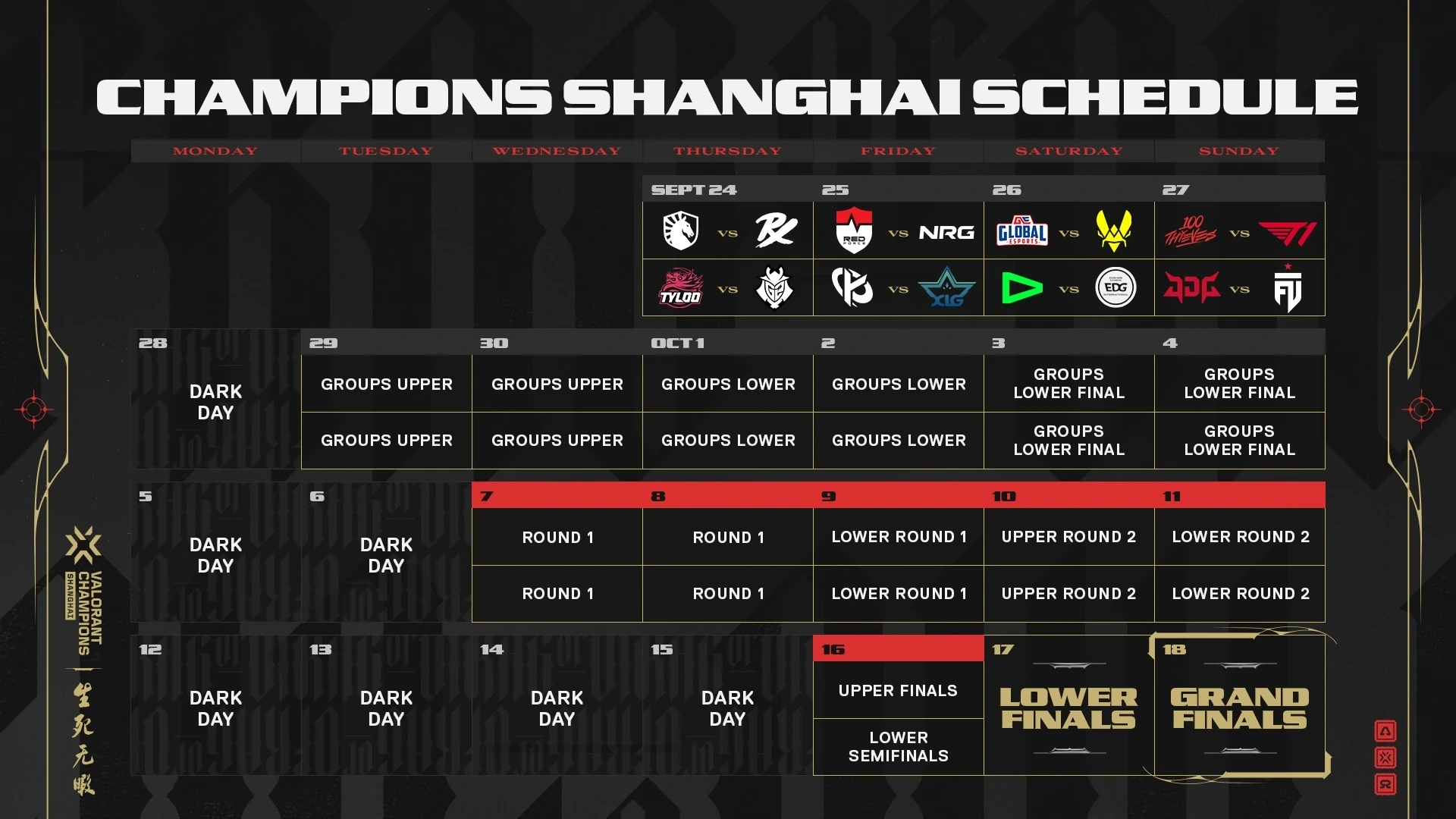
Champions Shanghai kicks off on September 24 with 16 squads and closes on October 18, when the 2026 world champion is crowned. The format is split into a Group Stage followed by playoffs. Four regional mixed groups cut the field to eight, and a double-elimination bracket then settles the title. A team that loses its first match still has a path forward, but a second loss ends its tournament. This page focuses on how the event is organized and what viewers can use, not on earlier coverage of merch, missing players or any single team’s prep.
Group Stage matches run until October 4. Every group holds one side from Americas, CN, EMEA and Pacific, so no group is made up of teams from a single regional league. Each match is best-of-three. Double elimination works within groups too: one loss can be recovered from, but a second knocks a team out. The top two in each group move on, filling the eight-team playoff bracket.
Because of that setup, the opener matters without being decisive. A win pushes a team toward one of the two qualifying spots, and a loss still leaves an elimination route open. The system rewards bouncing back, yet it never hands out endless second chances. Cross-regional pairings happen before the bracket begins, so each group has the same regional mix, even though opponents and paths vary.
How the two stages lead to the final
Once groups finish, October 5 and 6 are off days. Playoffs start October 7 and run through October 18 under double elimination. A single defeat drops a team to the lower bracket; a second one eliminates it. The schedule has playoff match days up to October 11, then another pause before finals weekend.
Play picks back up October 16, the lower-bracket final takes place October 17, and the grand final wraps everything up on October 18. The upper-bracket winner reaches the title match directly, while the rest of the lower-bracket field has to win an extra elimination series. The official guide confirms dates and loss rules but does not name a favorite. Seeding and recent form have no effect on those rules once play starts.
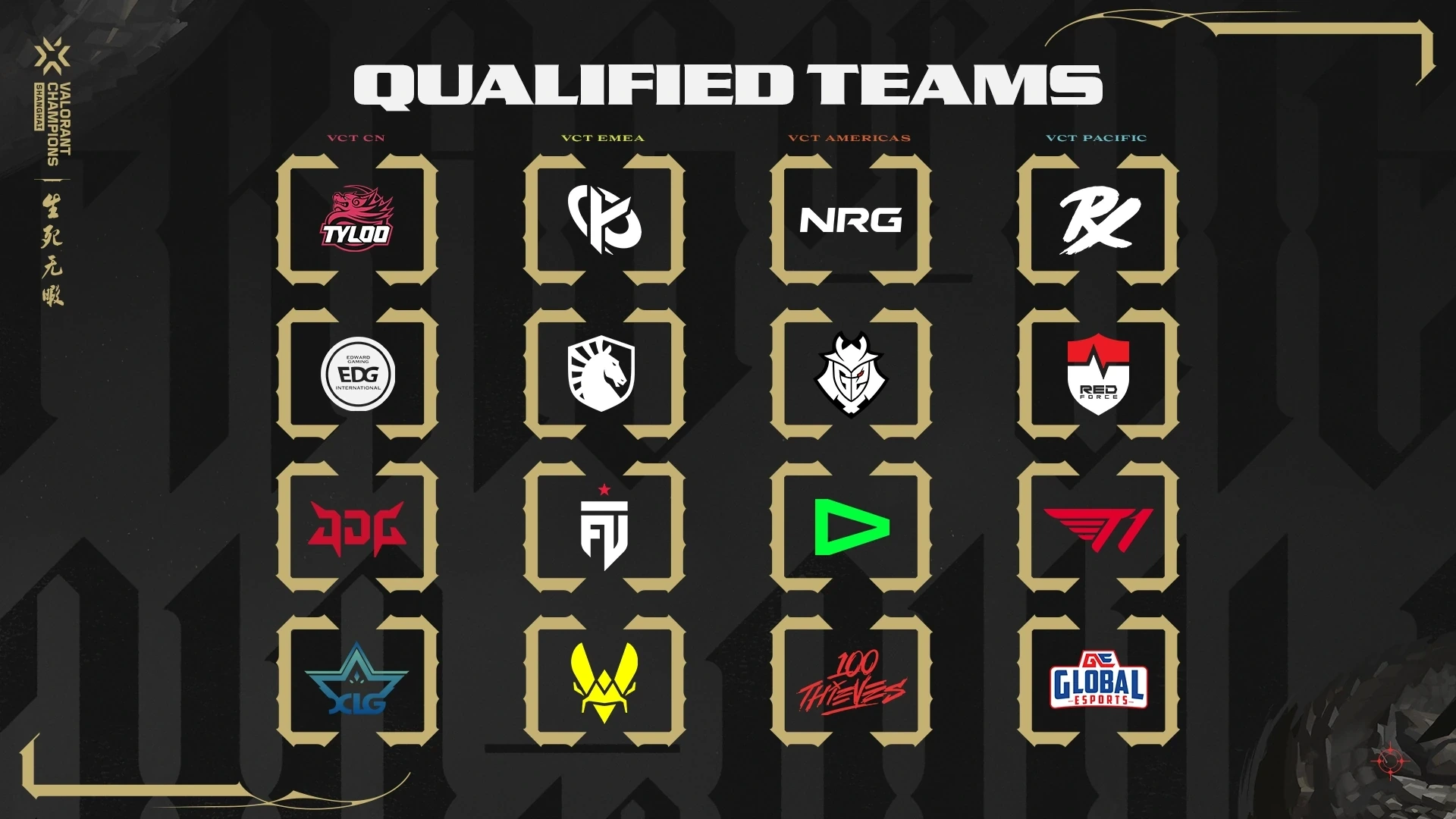
This is the first time Champions has been hosted in China, in Shanghai. Sixteen teams come from four circuits, yet the event crowns one global champion rather than separate regional winners. That matters because recent Stage results shape qualification and seeding, not the final global order. A team that dominated its region can still be eliminated after two losses, and a side dropping into an elimination match can keep going by winning it.
The calendar includes planned off days. September 28 is a dark day during groups. October 5 and 6 separate groups from playoffs, and October 12 through 15 sit between the main playoff block and finals weekend. These breaks are part of the published schedule, so an empty day shouldn’t be read as a cancellation.
Drops, Pick’Ems and live predictions
Riot links the broadcast to several viewer features. Watching eligible coverage can earn an exclusive Title through Drops. Pick’Ems lets fans lock in picks and compare reads, and Shotcall brings live Twitch predictions on maps, rounds and clutch moments. These are participation tools only; they have no bearing on the bracket or on official match results.
An MVP will be named after the final. Riot says talent, co-streamers and media will choose the winner based on impact, consistency and performance under pressure. Since the pick happens after the competition, nobody should be called the confirmed MVP before October 18. Strong group numbers can fuel debate, but they aren’t the award itself.
For the live broadcast and schedule changes, official VCT channels are the dependable source. Check the event pages for local start times, since this overview lists the stage calendar rather than one clock for every region. The fixed dates are the September 24 opening, the October 4 close of groups, the October 7 playoff start and the October 18 grand final.
Champions Shanghai runs four regional mixed groups into an eight-team double-elimination playoff, taking 16 entrants down to one champion. Off days mark each stage, and the lower final and grand final fall on back-to-back dates. Drops, Pick’Ems, Shotcall and the post-final MVP vote add to the viewing experience without touching the bracket.